Source Semi Automatic Tent Welding Machine for Stationery, Auto Parts, Electronics
Find 30 semi automatic tent welding machine options with features like air cooling, pneumatic power, and adjustable temperature control. Compare specifications including power supply, table size, and oscillation tube types from verified suppliers.
Key considerations
Products List






Comprehensive Sourcing Guide
Strategic Sourcing Guide for Semi-Automatic Tent Welding Machines
Understanding Technical Specifications and Operational Capabilities
When evaluating semi-automatic tent welding machines, buyers must first distinguish between the various technical configurations available in the market. The core operational characteristic of these machines is their control mechanism, which is often described as semi-automatic. This implies a workflow where the operator initiates the cycle or positions the material, while the machine automates the welding parameters, such as frequency generation and pressure application. The power supply for these units typically operates on alternating current (AC) with a voltage requirement of 380V at 50Hz, though some configurations may support 220V inputs. The electronic power consumption is a critical metric, with observed ranges extending from 8.5kVA up to 15kVA, indicating significant energy requirements that must be matched by the facility's electrical infrastructure.
The welding process itself relies on high-frequency oscillation, with frequency ranges typically observed at 27.12 MHz or 40.68 MHz. The choice of frequency often depends on the material thickness and the specific dielectric properties of the tent fabric being processed. The heart of the oscillation system is the tube, with documented models utilizing types such as 7t69rb, 7t85rb, or 3069. These tubes are paired with silicon diode rectifiers to ensure stable power conversion. The cooling method is predominantly air cooling, which simplifies maintenance but requires adequate ventilation in the production environment. The pneumatic system, essential for applying consistent pressure during the weld, often utilizes cylinders with dimensions around 80*75mm and requires a machine trachea (air line) of 8mm diameter.
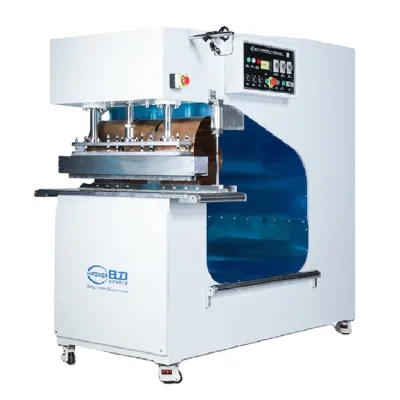
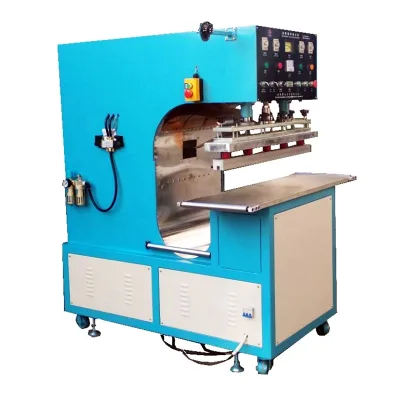
Work table dimensions vary significantly based on the intended application scale. Observed specifications include work tables sized at 1100450mm, 350700mm, or 400700mm. For larger operations, table sizes may extend to 10701210mm. The maximum electrode spacing is a crucial geometric constraint, typically ranging between 160mm and 220mm, which dictates the maximum width of the material that can be welded in a single pass. The machine's physical footprint is substantial, with overall dimensions observed at 147015202130mm or 107016801560mm, and the machine weight ranging from 350kg to 450kg. The floor-to-machine working table height is standardized at 800mm to ensure ergonomic operation.
Compliance, Certification, and Safety Standards
In the B2B procurement of industrial welding equipment, verifying compliance with international safety and quality standards is non-negotiable. The supplied data indicates that certain models carry CE certification, a mandatory requirement for products sold within the European Economic Area. This certification suggests that the machine meets essential health, safety, and environmental protection requirements. However, buyers should not assume that all listed units possess this status without explicit verification from the supplier, as certification status can vary by batch or specific model configuration.
Beyond CE, the industry often references standards such as ISO 9606 for welding personnel qualification and ISO 14732 for industrial automation systems, though these are not explicitly confirmed in the provided product facts. Instead, buyers should focus on verifying the machine's adherence to local electrical safety codes and the specific standards mentioned in the product documentation, such as the 700KG or 880KG weight standards which may relate to structural load testing or packaging requirements. The production origin is listed as China, with specific mentions of Shenzhen as a manufacturing hub. While this provides geographical context, it does not inherently guarantee quality; therefore, the presence of a valid CE mark or equivalent regional certification should be the primary compliance checkpoint.
Buyers must also consider the environmental and material safety aspects. While RoHS compliance is a common industry expectation for electronic components, it is listed here as a low-confidence background fact. Consequently, procurement teams should explicitly request a Declaration of Conformity regarding hazardous substances rather than relying on general market assumptions. The packaging standard, often a wooden case for export, serves as a protective measure but also implies adherence to ISPM 15 standards for international shipping to prevent pest transfer, a detail that should be confirmed in the logistics agreement.
Cost Drivers and Pricing Variables
The pricing structure for semi-automatic tent welding machines is influenced by a complex interplay of factors, including power capacity, automation level, and customization options. The observed price range in the market spans from 1 USD to 100,000 USD, a variance that reflects the difference between basic entry-level units and high-capacity industrial systems. The primary cost driver is the electronic power rating; units with 15kVA capacity will naturally command a higher price than those rated at 8kW or 5kW. The inclusion of advanced features, such as computerized control systems and adjustable temperature control ranges (50-300°C), adds to the manufacturing complexity and final cost.
Customization is a significant variable in the cost equation. The availability of customization options allows buyers to tailor the machine to specific production needs, such as altering the work table size or modifying the electrode spacing. However, these bespoke modifications often incur additional charges and can extend the lead time. The type of oscillation tube used also impacts cost; specialized tubes like the 7t85rb may be more expensive than standard alternatives. Furthermore, the inclusion of a silicon diode rectifier and the robustness of the pneumatic cylinder system contribute to the overall build quality and price point.
Buyers should also account for the cost of ancillary equipment and logistics. The machine is typically shipped in a wooden case, which adds to the shipping weight and volume. If the machine requires specific voltage conversions or additional safety interlocks not included in the base model, these will increase the total landed cost. The minimum order quantity (MOQ) is observed to be 1, which suggests that single-unit purchases are feasible, but bulk orders may offer economies of scale. It is crucial to request a detailed breakdown of costs to understand whether the price includes installation, training, or after-sales support, as these services can significantly affect the total investment.
Typical Applications and Material Compatibility
Semi-automatic tent welding machines are designed for a diverse range of applications, extending beyond simple tent fabrication. The primary application is in the manufacturing of household appliances, where they are used for sealing components that require airtight or watertight joints. Additionally, these machines are widely utilized in the stationery and electronic industries for assembling plastic components. The ability to weld PVC board and multilayer boards makes them versatile for producing signage, display stands, and protective covers.
The specific welding product dimensions observed, such as 20*600mm, indicate the machine's capability to handle long, narrow strips or seams. This is particularly relevant for tent manufacturing, where long seams must be welded with high precision to ensure structural integrity. The vertical style of the machine allows for efficient use of floor space and facilitates the handling of large, flat materials. The temperature control range of 50-300°C is adjustable, enabling the machine to process various thermoplastic materials with different melting points. This flexibility is essential for manufacturers who need to switch between different fabric types or thicknesses without changing equipment.
The machine's application in the automotive sector for auto parts further highlights its versatility. The semi-automatic control allows operators to maintain consistent weld quality while managing the physical handling of parts. The computerized nature of the control system ensures that parameters can be saved and recalled, which is beneficial for repetitive production runs. Buyers should verify that the machine's work table size and electrode spacing are compatible with their specific product dimensions to avoid bottlenecks in the production line.
Supplier Evaluation and Operational Readiness
Evaluating a supplier for semi-automatic tent welding machines requires a focus on technical competence and operational support. The supplier's location, often in China or specifically Shenzhen, provides access to a robust manufacturing ecosystem, but it also necessitates careful vetting of their export capabilities. Buyers should verify the supplier's experience with international shipping, particularly regarding the wooden case packaging and the handling of heavy machinery weighing up to 450kg. The "Fast" delivery time mentioned in the product facts is a positive indicator, but it should be contextualized with a written delivery schedule to ensure reliability.
Operational readiness is another critical factor. The machine is described as having an "Easy" operating interface, which suggests a user-friendly design. However, buyers should request demonstration videos or on-site training protocols to confirm that the semi-automatic workflow is intuitive for their workforce. The availability of spare parts, such as oscillation tubes and pneumatic cylinders, is essential for minimizing downtime. Suppliers who offer a comprehensive after-sales support package, including troubleshooting guides and remote assistance, are preferable.
When assessing the supplier, buyers should also consider the customization capabilities. The ability to tailor the machine to specific needs, such as adjusting the work table size or modifying the control system, indicates a flexible and responsive manufacturing partner. The supplier's adherence to quality standards, such as the CE certification mentioned, should be verified through valid documentation. Finally, the supplier's reputation in the market, particularly regarding the delivery of machines with the specified power ratings and frequency ranges, should be investigated through customer references or industry reviews.
Quality Control and Long-Term Procurement Considerations
Ensuring the quality of semi-automatic tent welding machines requires a rigorous quality control (QC) process that extends beyond the initial inspection. Buyers should implement a multi-stage QC strategy that includes pre-shipment inspections, factory audits, and post-installation testing. The pre-shipment inspection should verify that the machine's dimensions, weight, and electrical specifications match the purchase order. Specific attention should be paid to the oscillation tube type, the rectifier quality, and the pneumatic cylinder performance.
Long-term procurement considerations involve planning for maintenance and lifecycle management. The machine's air cooling system requires regular cleaning to prevent overheating, and the pneumatic components need periodic lubrication and seal replacement. The temperature control range and frequency settings should be calibrated regularly to maintain weld consistency. Buyers should also consider the obsolescence risk; as technology evolves, the availability of spare parts for older models like those with 7t69rb tubes may diminish. Therefore, selecting a supplier with a commitment to long-term support and parts availability is crucial.
The procurement strategy should also include a plan for scalability. As production demands grow, the ability to upgrade the machine or add additional units should be considered. The modular nature of the semi-automatic control system allows for potential upgrades, but this depends on the supplier's ability to provide compatible components. Finally, buyers should establish a clear warranty and service level agreement (SLA) that covers critical components like the oscillation tube and the power supply. This ensures that any failures are addressed promptly, minimizing production disruptions and protecting the investment in the welding equipment.
FAQs
What power supply voltage is required for this machine?
The machine typically requires a 380V 50Hz power supply, though some models support 220V inputs. This ensures compatibility with standard industrial electrical infrastructure in most regions.
Which frequency range does the oscillation system operate at?
The system operates at high frequencies, specifically 27.12 MHz or 40.68 MHz. These frequencies are selected based on the material thickness and dielectric properties of the fabric being welded.
Can the machine handle customization for specific work table sizes?
Yes, customization is available for various work table dimensions such as 1100*450mm or 1070*1210mm. Buyers should verify specific requirements with the supplier to ensure the machine fits their production line.
What is the maximum electrode spacing for welding operations?
The maximum electrode spacing ranges between 160mm and 220mm. This dimension dictates the maximum width of the material that can be welded in a single pass effectively.
How is the machine cooled during operation?
The machine utilizes air cooling as the primary method. This design simplifies maintenance but requires adequate ventilation in the production environment to ensure optimal performance.
What certification is available for this equipment?
Some models carry CE certification, indicating compliance with European safety standards. Buyers must verify specific certification status with the supplier as it may vary by batch or configuration.
What is the typical delivery time for these machines?
The delivery time is described as fast, though exact schedules depend on the order volume. Buyers should request a written delivery schedule to confirm reliability for their project timeline.